
Examples#
Here you can find a gallery of examples demonstrating the capabilities of pyFBS. Have fun exploring FBS field!
Basic examples#
This examples show how to use basic features of pyFBS. Explore this basic examples to get familiar with the pyFBS workflow.
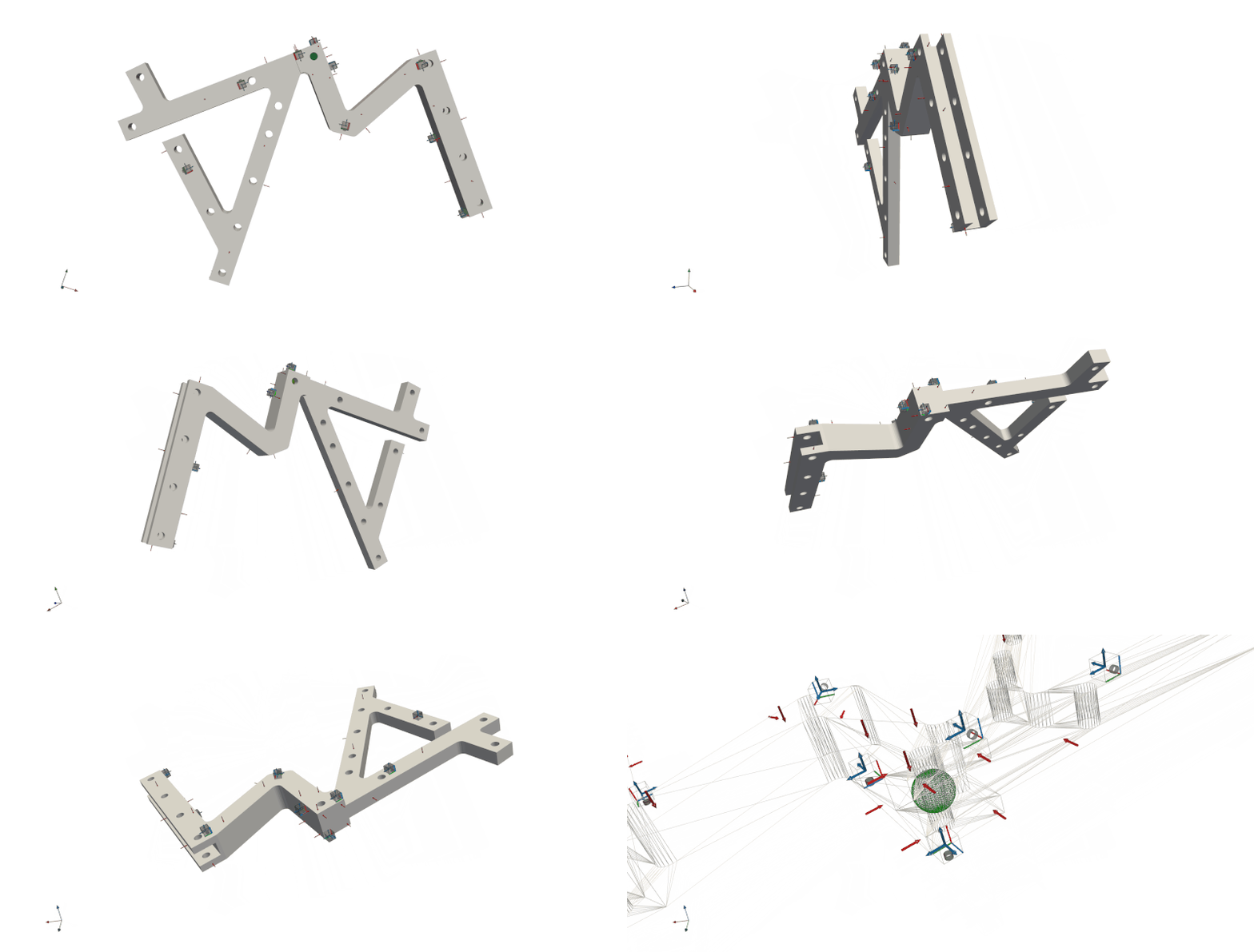
Static display#
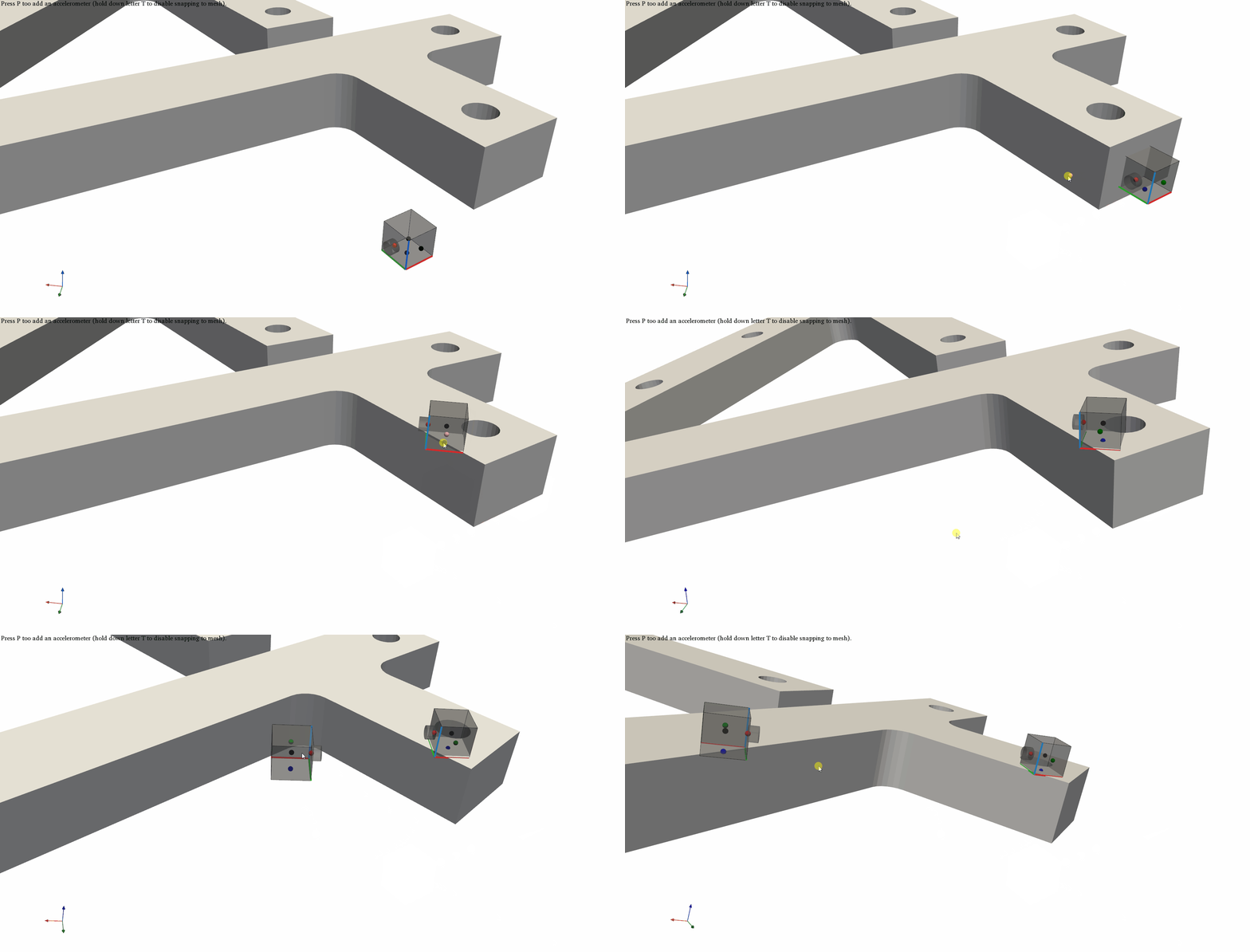
Interactive positioning#
FRF synthetization#
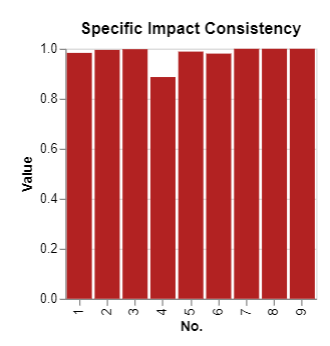
Plotting with wrapper functions#
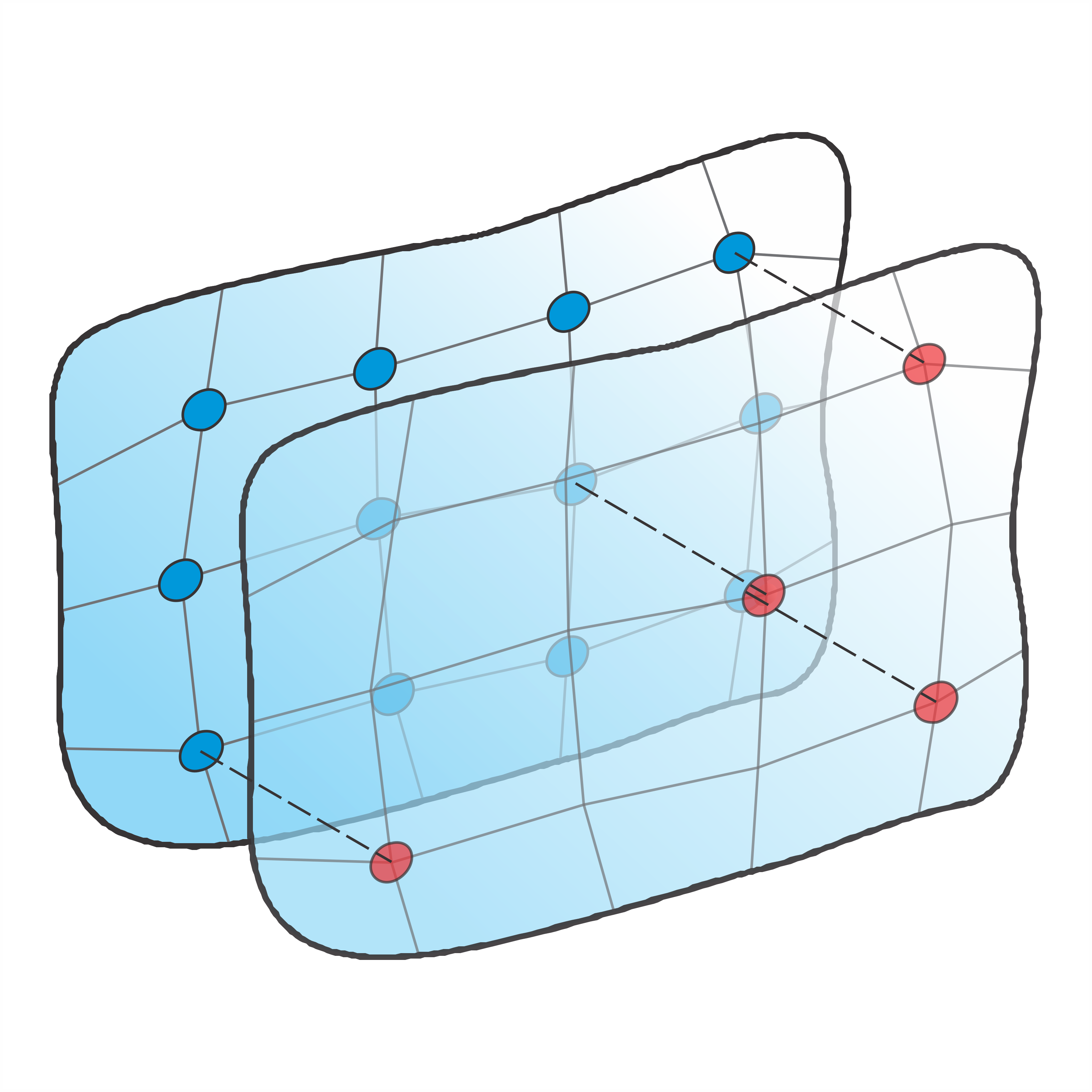
Interface modelling#
In experimental dynamic substructuring, coupling of substructures sharing a line- or surface-like interface proves to be a challenge due to the difficulties in interface modelling. Modelling a high number of degrees of freedom at the common interface can be too stringent when imposing compatibility and equilibrium conditions, thereby causing redundancy and ill-conditioning. These examples show state-of-the-art techniques to establish an interface model composed of significant degrees of freedom.
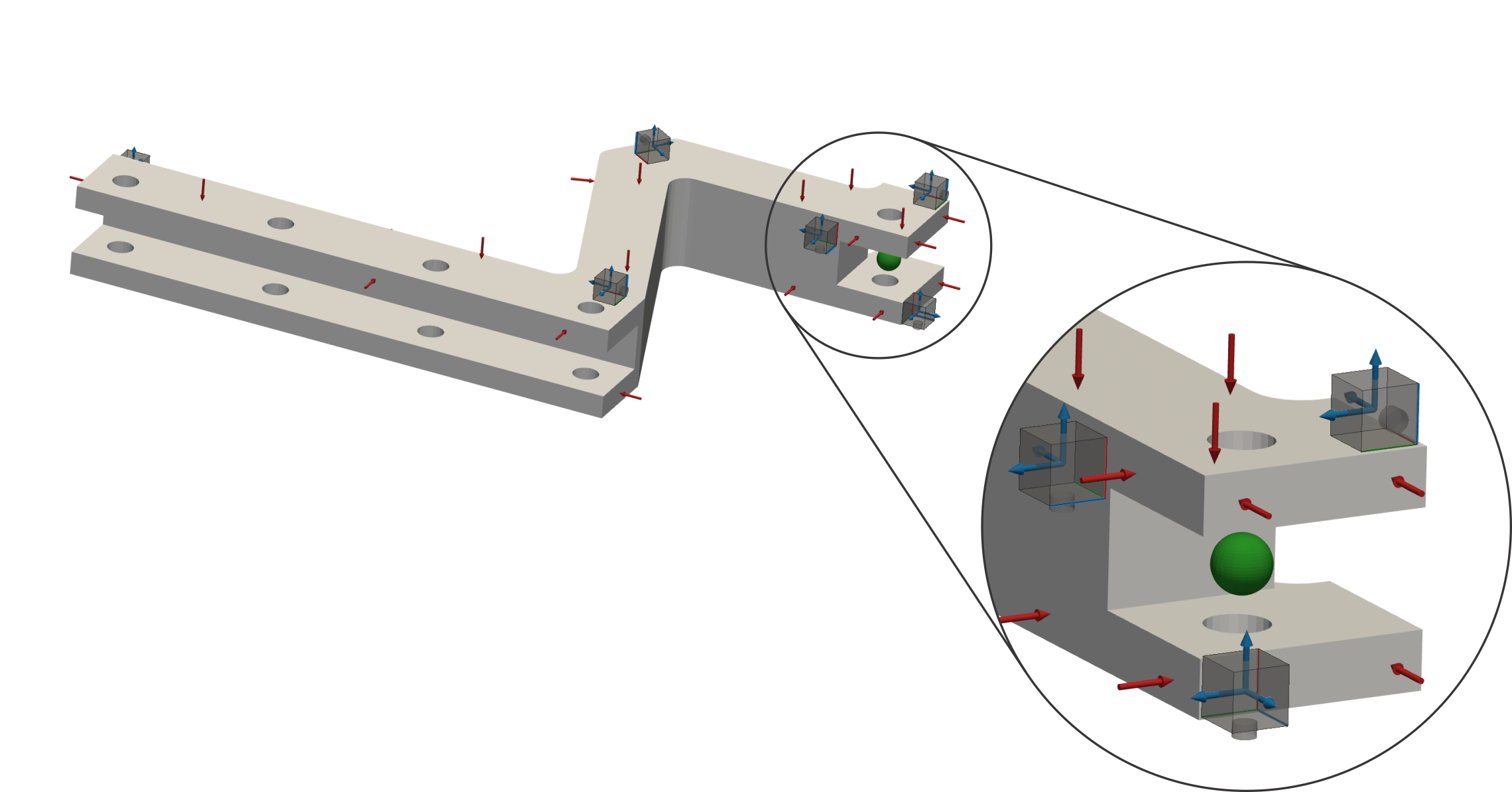
VPT example#
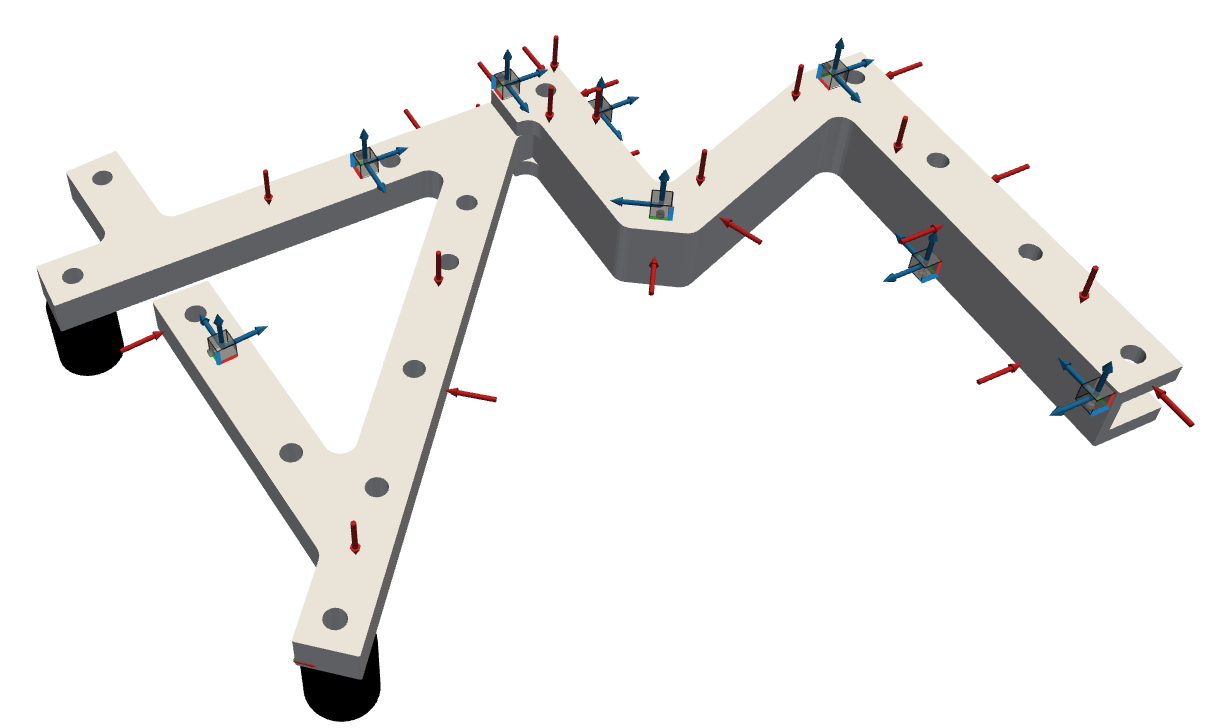
SVT example#
Frequency Based Substructuring#
Structural dynamic analyses can be carried out more efficiently if complex systems are divided into smaller subsystems, analysed separately, and later coupled using dynamic substructuring (DS) methods. In terms of the modeling domain, a frequency-based substructuring (FBS) is often preferred by experimentalists due to its ease of use and implementation with directly measured Frequency Response Functions (FRFs). These examples show state-of-the-art techniques to successfully couple or decouple substructures using FBS framework.
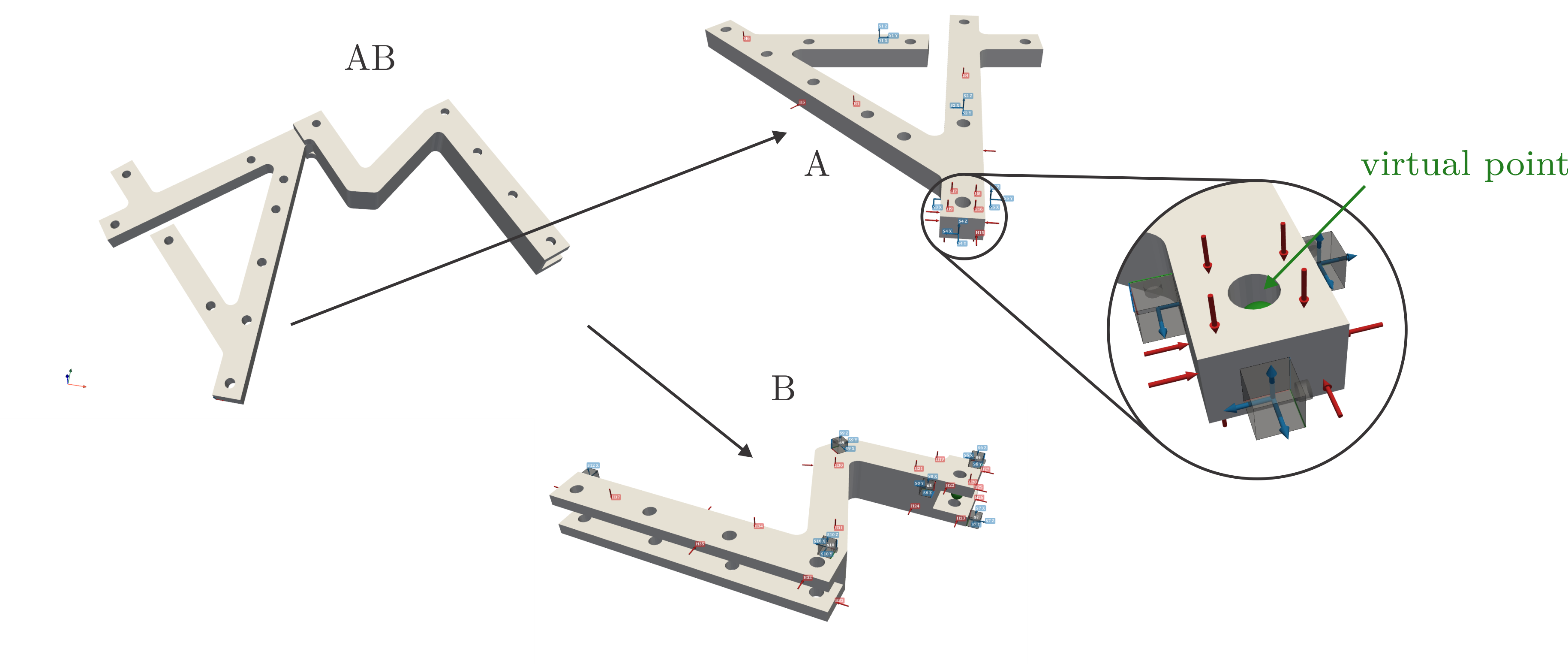
FBS Coupling with VPT#
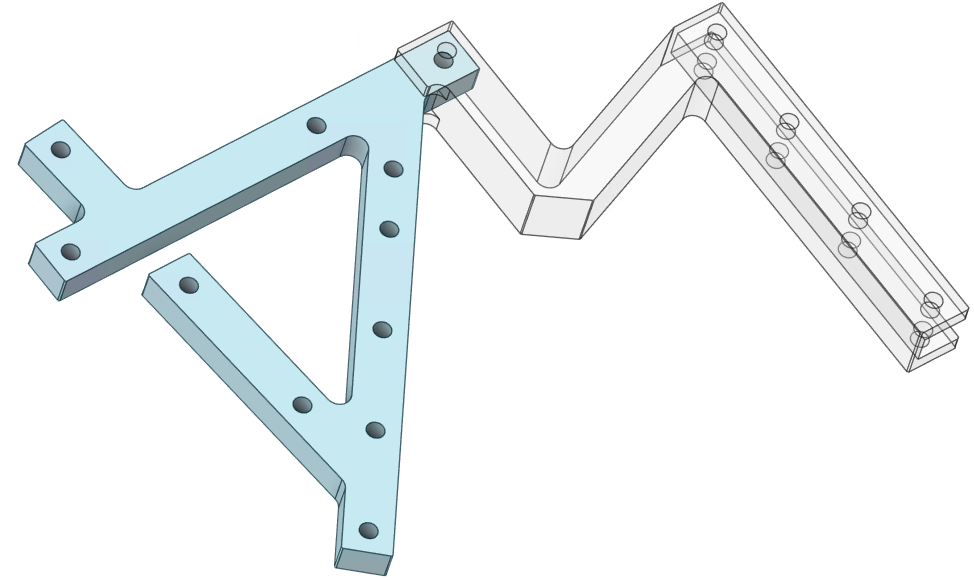
FBS Decoupling with VPT#
FBS Decoupling with SVT#
Transfer Path Analysis#
Transfer-path analysis (TPA) is a reliable and effective diagnostic tool for the characterization of actively vibrating components and the propagation of noise and vibrations to the connected passive substructures. TPA offers the ability to analyse the vibration transfer between the individual components of the assembly, distinguish the partial transfer-path contribution and predict the receiver’s response.
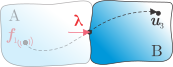
Classical TPA#
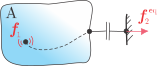
Component-based TPA#
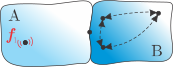
Transmissibility-based TPA#
Dynamic expansion#
A high-resolution dynamic response is important for characterizing a system’s dynamic properties. Measurements involving a limited number of points on the structure can be expanded to unmeasured points through approximation or model-based expansion techniques that rely on the introduction of a numerical model.
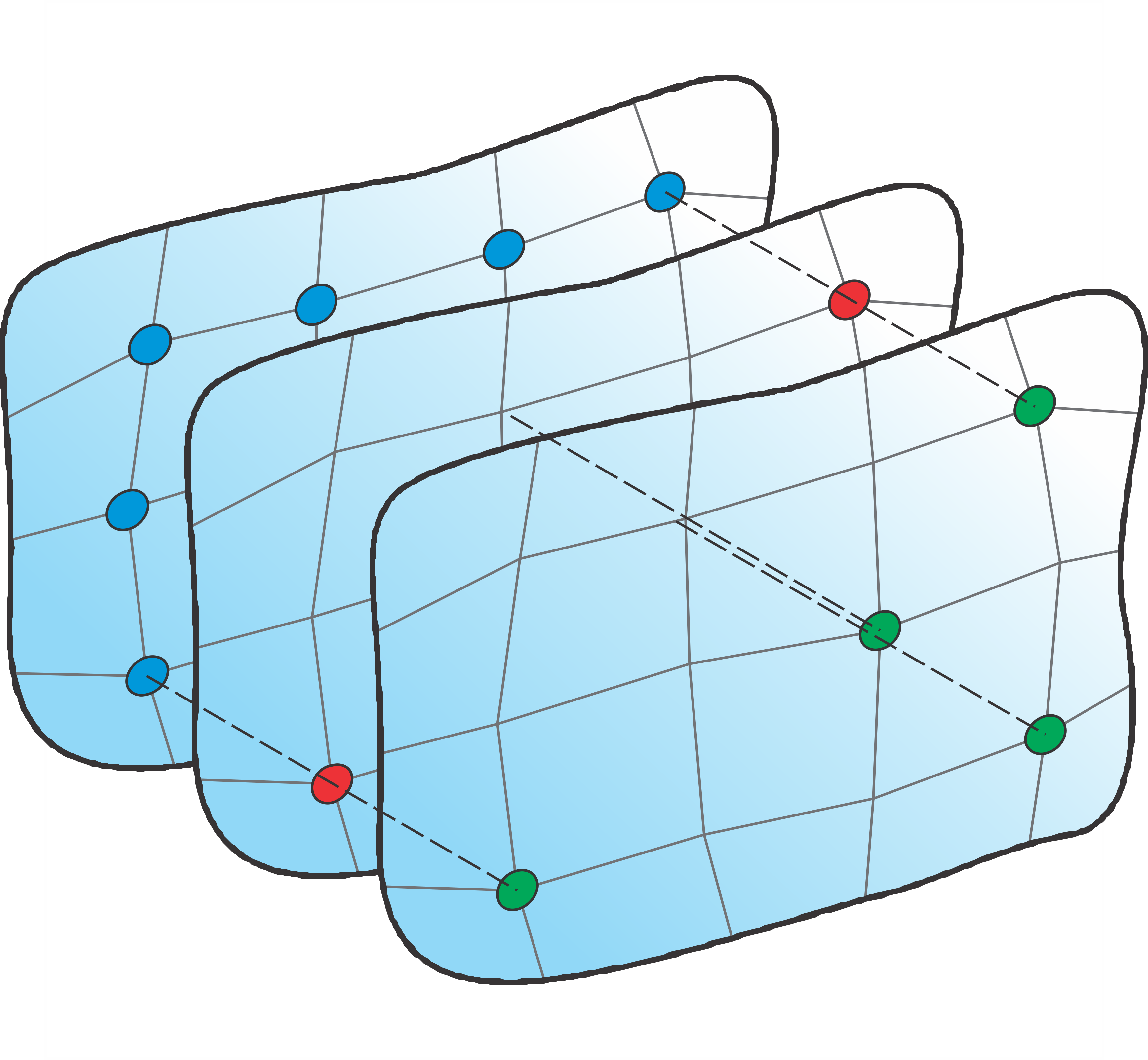
System Equivalent Model Mixing in Frequency Domain (SEMM)#
System Equivalent Reduction Expansion Process (SEREP)#
Modal identification#
The response of a system can often be represented by much fewer variables in the modal domain. A feature of pyFBS, multi-reference modal identification method, enables you to perform experimental or operational modal analysis and identify modal parameters from experimental dynamic models.
Experimental Modal Analysis#
Case studies#
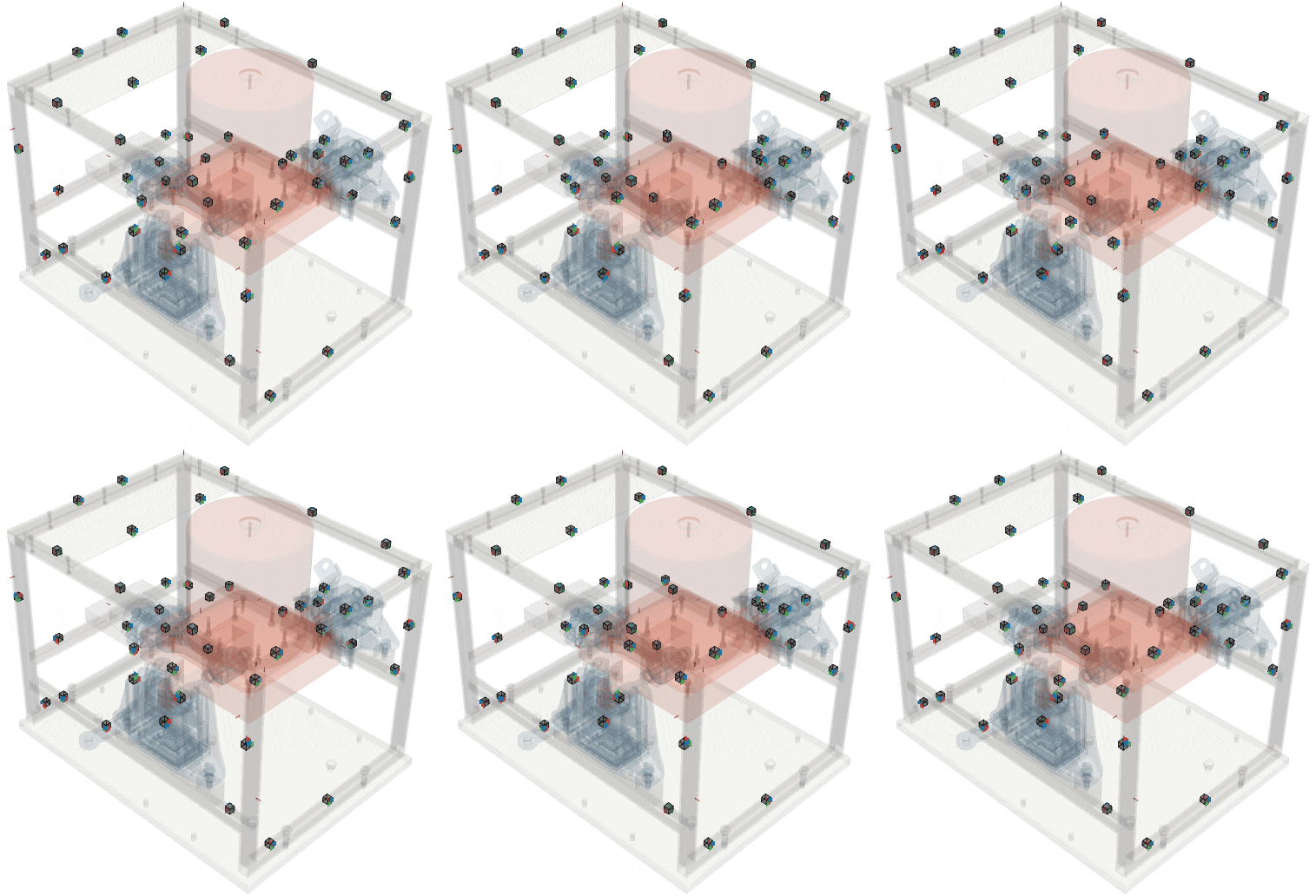
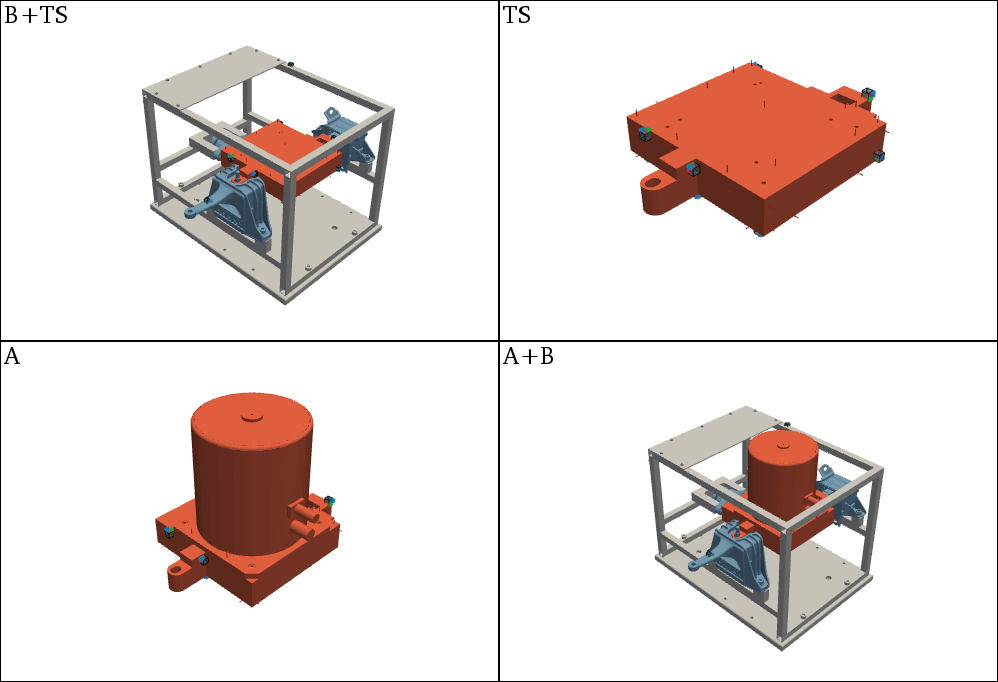
These examples show applications of the pyFBS on more complex problems. Explore this application examples to see how pyFBS can be used on more complex dynamic problems.
Operational Deflection Shapes#
Transmission Simulator#
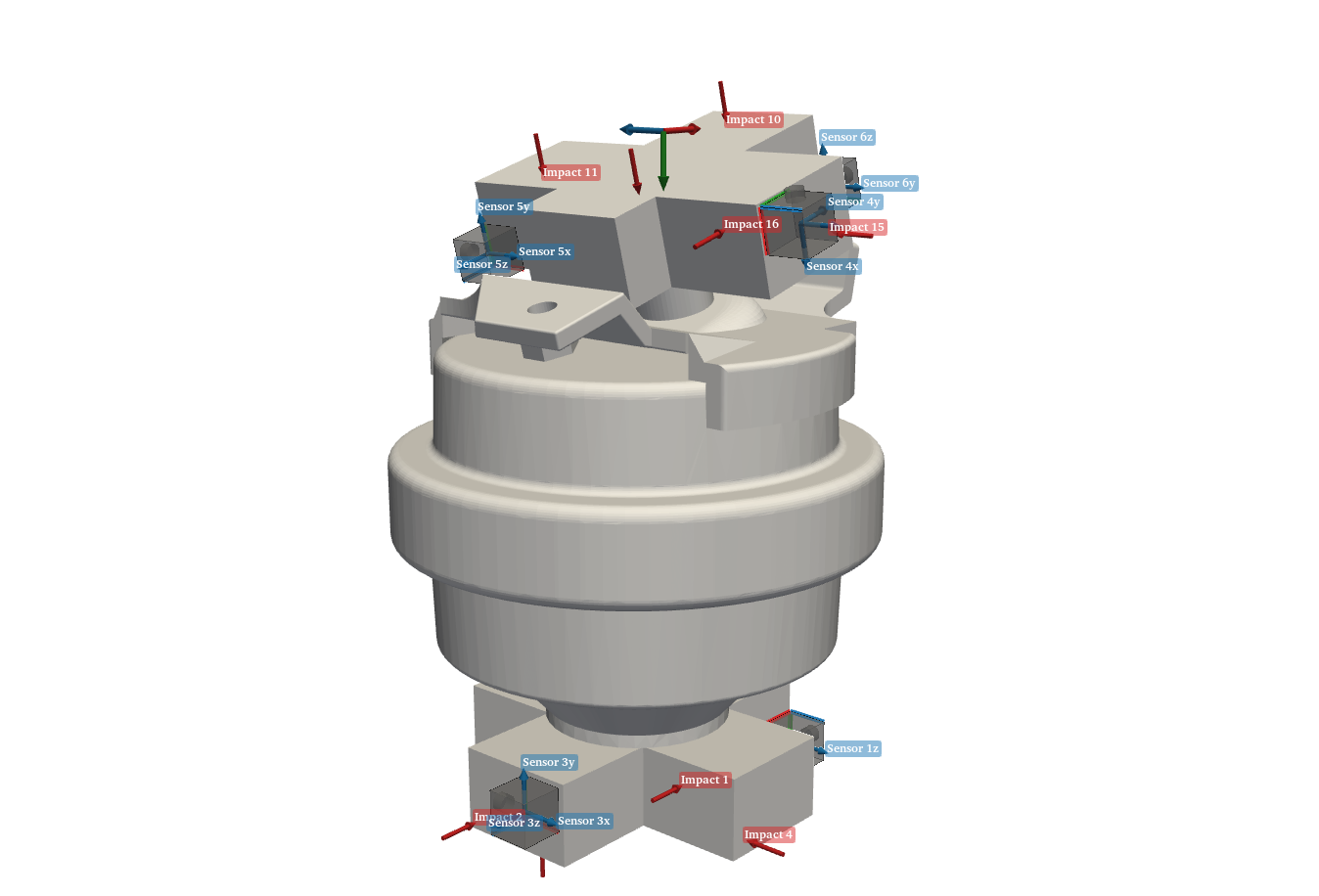
Rubber Mount Characterization#